*Public Lecture on “Why Nations Fail?”* On October 7, 2025, the Department of Economics at the Civil Service Institute (CSI) organized a highly engaging and intellectually stimulating public lecture o
*Public Lecture on “Why Nations Fail?”*On October 7, 2025, the Department of Economics at the Civil Service Institute (CSI) organized a highly engaging and intellectually stimulating public lecture on the theme *“Why Nations Fail?”*
The session was officially opened by *Mr. Ahmed Egeh,* Dean of Economics and Human Resource Management at CSI. *Mr. Ahmed* warmly welcomed the facilitator and students. In his remarks, Mr. Ahmed highlighted the importance of such academic events in broadening fellow Economics students’ understanding of the interaction between economic systems, governance, and development policy.
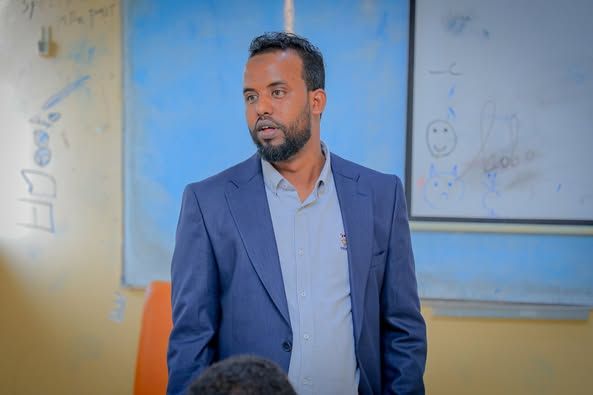
The lecture was delivered by *Dr. Mezid Nasir,* a distinguished economist holding a *Ph.D. in Economics. Dr. Mezid* presented a comprehensive discussion titled *“The Making of Prosperity and Poverty,”* based on the works of Daron Acemoglu and James A. Robinson, particularly their book Why Nations Fail. *Dr. Mezid* poses the critical question of why some nations achieve enduring prosperity while others remain trapped in cycles of poverty.
Drawing on compelling case studies such as North and South Korea, Barbados in the 17th century, and the Democratic Republic of Congo since 17th century. *Dr. Mezid* explained how the success or failure of nations is determined by the nature of their political and economic institutions. He discussed inclusive institutions, which promote opportunity, innovation, and equitable growth, and extractive institutions, which concentrate power and wealth in the hands of a few, thereby impeding progress.
He further highlighted the essential roles of education, technology, and effective governance as key drivers of prosperity and sustainable development. In relating these insights to Somalia and Somaliland, Dr. Mezid underscored the need for institutional reform and political centralization as fundamental prerequisites for long-term national development.
The session concluded with a lively and thought-provoking discussion, during which students actively participated and reflected on how the lecture’s insights could be applied within context.